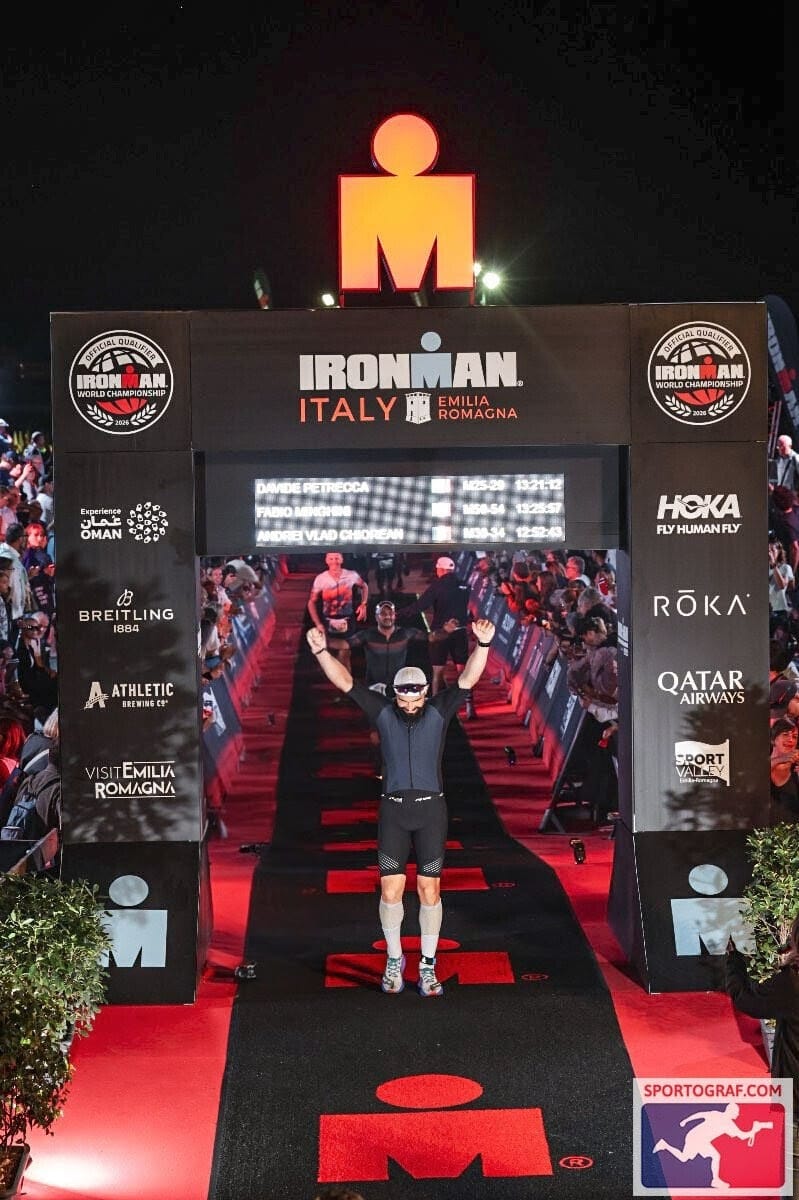
What is an Ironman?
The Race That Started a Bet
In 1977, U.S. Navy Commander John Collins proposed a challenge to settle a debate: who was fitter — swimmers, cyclists, or runners? His solution: combine the three toughest existing Hawaiian endurance events into a single race. Complete them in order, without stopping.
The Ironman was born. Fifteen people started that first race on February 18, 1978. Twelve finished. The winner's note left at the finish line read: "Swim 2.4 miles. Bike 112 miles. Run 26.2 miles. Brag for the rest of your life."
The Distances
A full Ironman triathlon covers:
- Swim: 3.86 km (2.4 miles) — open water
- Bike: 180.25 km (112 miles)
- Run: 42.2 km (26.2 miles — a full marathon)
Total: 226 km (140.6 miles). The cutoff time is 17 hours. Athletes who finish earn the right to cross the line and hear the legendary announcement: "You are an Ironman."
The Ironman 70.3 (Half Ironman) covers exactly half the full distance: 1.9km swim + 90km bike + 21.1km run. The 70.3 refers to the total mileage. It's the most popular long-course format worldwide — challenging but achievable for athletes with existing fitness.
Typical Finish Times
- Full Ironman: recreational athletes typically finish in 11–16 hours. Age-group competitors aim for 9–11 hours.
- Half Ironman: recreational range is 5–8 hours. Competitive age-groupers target 4–5.5 hours.
These ranges are wide because the fields are wide. A 12-hour Ironman finish and a 10-hour finish both earn the same title.
What Race Day Actually Feels Like
The Swim Start
The mass swim start — hundreds or thousands of bodies entering the water simultaneously — is unlike anything you've trained for. The first 200 metres are chaotic: arms, legs, and feet everywhere, sighting nearly impossible, breathing disrupted. This is why open-water swim practice is non-negotiable in preparation. It passes. Within a kilometre, the field spreads and you find space.
The Bike: Where the Race Is Really Set
The cycling leg is where strategic decisions compound. Go five percent too hard and you'll pay for it starting around kilometre 120. Most athletes aim for 70–75% of threshold power — a pace that feels almost too easy for the first 60km and sustainable for the duration. The athletes who run well off the bike are almost always the ones who had the discipline to hold back early.
The Ironman run doesn't start at kilometre 0. It starts at the first pedal stroke of the bike.
The Run
After 3.86km in the water and 180km on the bike, the run is a different event entirely. Your legs adapt — most athletes take 3–5km to find their running stride — but cumulative fatigue means the final 10km is as much psychology as physiology. The athletes who practice running off tired legs in training (brick workouts) arrive at this point prepared.
Nutrition: The Fourth Discipline
Most DNFs and performance blowups at Ironman are fuelling failures, not fitness failures. The math is unforgiving: a full Ironman can require 7,000–9,000 kilocalories of energy. You start the race with roughly 1,500–2,000 kcal in glycogen stores. The rest must come from on-course nutrition.
This means eating and drinking on a schedule, not on feel. Race conditions suppress hunger. Athletes who wait until they're hungry or thirsty are already in a deficit. The rule: start fuelling early, maintain consistent caloric intake across the bike, and transition to simpler carbohydrates on the run.
Nutrition strategy is trained, not improvised on race day.
Training Timeline
- Full Ironman: minimum 9–12 months of structured preparation for athletes coming from a running or cycling background. From zero endurance base, allow 18+ months.
- Half Ironman: 5–6 months with existing single-sport fitness; 9–12 months from a recreational base.
How to Know If You're Ready
The most honest readiness checklist for an Ironman: Can you complete each discipline individually, in training, at race distance or close to it? Can you execute back-to-back long sessions (long ride Saturday, long run Sunday) without significant breakdown? Can you take in race nutrition during long training sessions without GI issues?
If yes to all three, you're ready to put the pieces together on race day. If no, more base training is the answer — not more race rehearsal.
Training for an Ironman? Athle2 builds AI-powered periodized plans around your coach's vision. Join the waitlist at athle2.com